

Buying property in Nigeria can be a great way to build long-term wealth, secure a home for your family, or make a profitable investment. However, the process requires careful planning and proper verification.
For a first-time buyer, the most important thing is not simply finding a property you like. You also need to confirm that the property has genuine ownership documents, a clear title, and no hidden legal issues.
In this guide, we explain the key steps you should take before buying property in Nigeria.
1. Determine Your Budget
Before you start searching for a property, establish how much you can comfortably afford.
Your budget should include more than the advertised purchase price. You may also need money for:
- Legal fees
- Survey and verification
- Documentation
- Government fees
- Agency fees
- Renovation or repairs
- Moving expenses
Having a clear budget will help you focus on properties that are realistic for you and avoid unnecessary financial pressure.
2. Decide What Type of Property You Need
Think carefully about the purpose of the purchase.
Are you looking for:
- A family home?
- An apartment?
- Land for future development?
- A commercial property?
- A property for rental income?
- An investment property?
Your purpose will influence the location, property type, size and amount you should be willing to spend.
3. Choose the Right Location
Location is one of the most important factors when buying property.
Consider access to:
- Good roads
- Schools
- Hospitals
- Markets and shopping centres
- Public transportation
- Employment and business areas
- Electricity and water
- Security
Also consider future development. A location that is currently developing may offer opportunities for long-term appreciation.
4. Research the Property and Its Owner
Never rely only on information provided by a seller or agent.
Ask questions about the property's history and ownership. Find out who owns the property and how the current owner acquired it.
You should also investigate whether there are disputes, outstanding claims, mortgages or other issues affecting the property.
5. Verify the Property Documents
This is one of the most important stages of buying property in Nigeria.
Depending on the type and location of the property, documents may include:
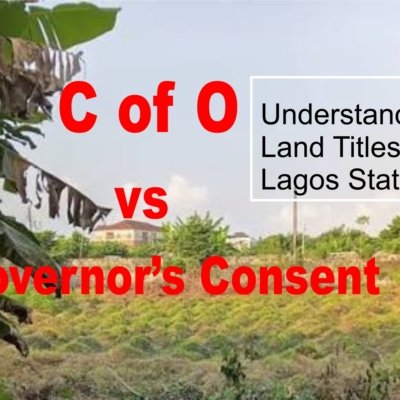
- Certificate of Occupancy (C of O)
- Deed of Assignment
- Governor's Consent
- Survey Plan
- Registered Deed
- Allocation Letter
- Building Approval
- Other relevant title documents
The documents should be properly examined and verified before you make a major financial commitment.
6. Use a Qualified Property Lawyer
A property lawyer can help you investigate the title and identify potential problems before you complete the transaction.
Your lawyer can conduct the necessary searches, examine the documents, confirm ownership and advise you on the appropriate agreement and transfer process.
This expense can save you from much bigger problems later.
7. Conduct a Property Inspection
Always inspect the property physically before buying.
Look at the condition of the building, access roads, drainage, surrounding environment and available infrastructure.
If you are buying land, inspect the exact location and boundaries. Do not rely solely on photographs, videos or descriptions.
8. Confirm the Survey and Boundaries
For land purchases, it is particularly important to confirm the survey information and physical boundaries.
A qualified surveyor can help establish the property's location, dimensions and coordinates and determine whether the land corresponds with the documents provided.
9. Be Careful With Payments
Avoid rushing into payment because a seller claims that other buyers are interested.
Before making a substantial payment, make sure the necessary verification has been completed and you understand exactly what you are purchasing.
Keep proper records of agreements, receipts and payments.
10. Complete the Legal Transfer
Once the property has been properly verified and both parties agree on the transaction, the necessary legal documents should be prepared and executed.
The appropriate registration and consent processes should also be completed where required.
Do not assume that simply paying for a property automatically makes the ownership process complete.
Common Mistakes First-Time Buyers Should Avoid
Some common mistakes include:
Buying without verifying ownership:
A property may be advertised by someone who does not have the legal authority to sell it.
Relying only on an agent's word:
A reputable agent can help you find property, but independent legal and document verification is still important.
Ignoring location risks:
A cheap property may have problems with access, flooding, planning restrictions or infrastructure.
Paying too quickly:
Pressure from a seller should not replace proper due diligence.
Skipping professional advice:
A lawyer and surveyor can identify issues that an ordinary buyer may not notice.
Final Thoughts
Buying property is a major financial decision, and taking your time can help you avoid expensive mistakes.
Research the location, inspect the property, verify the ownership documents, use qualified professionals and make sure the legal transfer is properly handled.
Whether you are looking for a home, land, an apartment or an investment property, PropertyDeal.ng can help you discover property listings across different locations in Nigeria.
Ready to start your search? Explore available properties on PropertyDeal.ng and find a property that matches your needs and budget.



Join The Discussion